01/ 06 · ROUTE
Route & Design
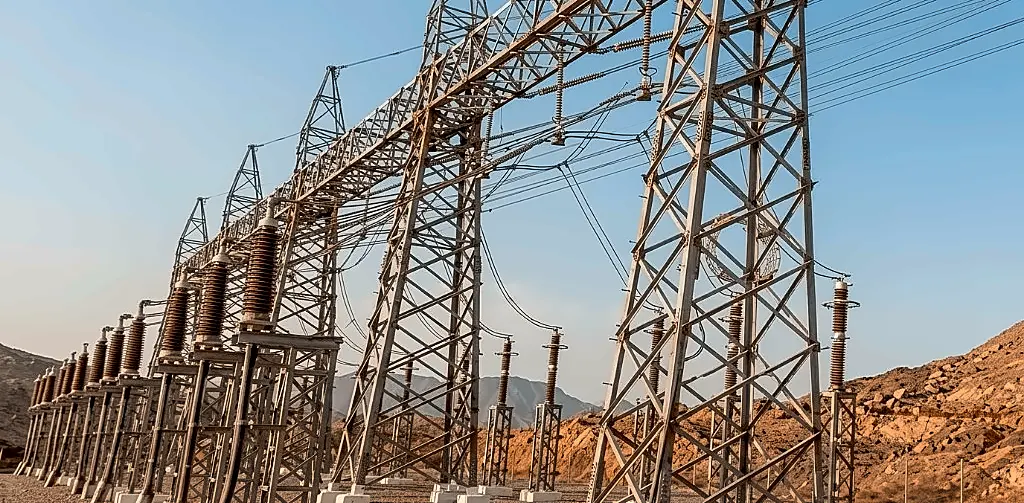
The route is surveyed and drawn first: tower positions, span lengths, the transition point, and the cable corridor through town.
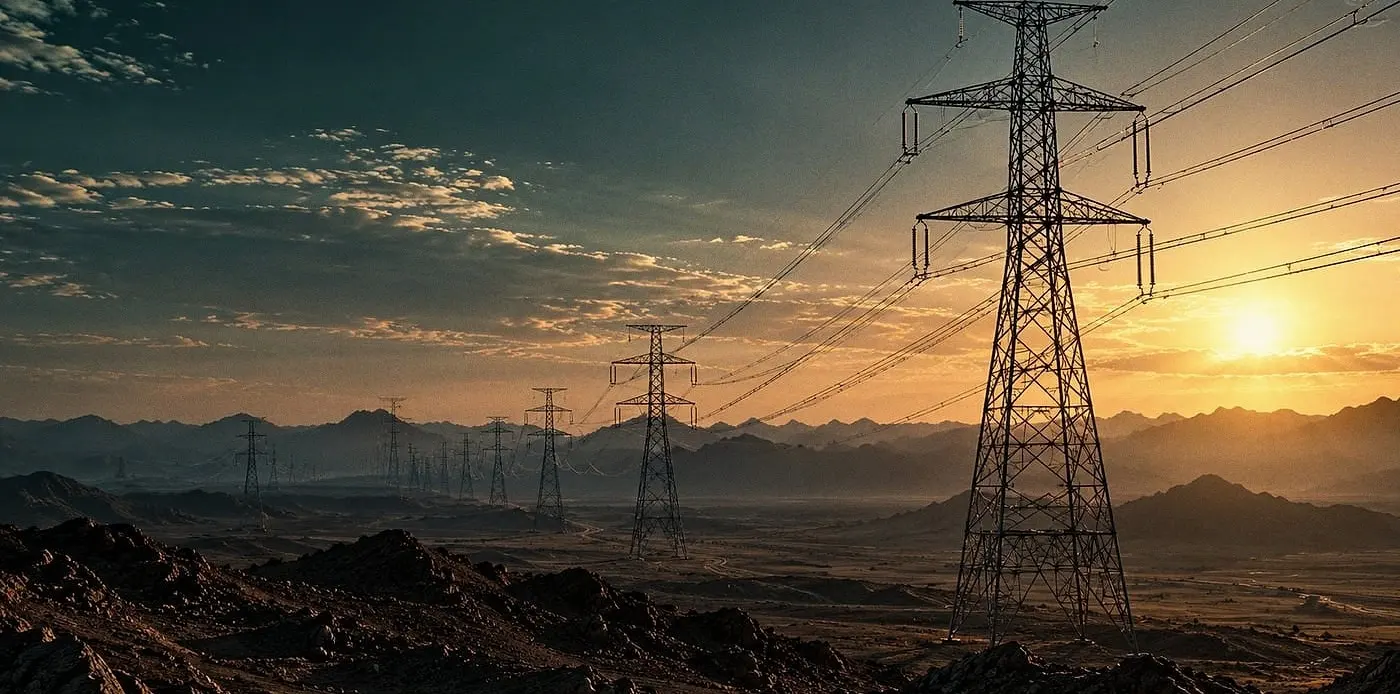
Overhead transmission line and HV underground cable EPC across Saudi Arabia.
Overhead transmission corridors and HV underground cable installation across multi-route projects, engineered for the Kingdom's terrain.
Scroll along one HV circuit: overhead line across open country, then underground cable through town to the receiving substation.
The route is surveyed and drawn first: tower positions, span lengths, the transition point, and the cable corridor through town.
Footings are cast, then lattice steel goes up panel by panel, from the far end of the line to the terminal tower.
Shield wire first, then the phase conductors, pulled span by span under tension and sagged to the design profile.
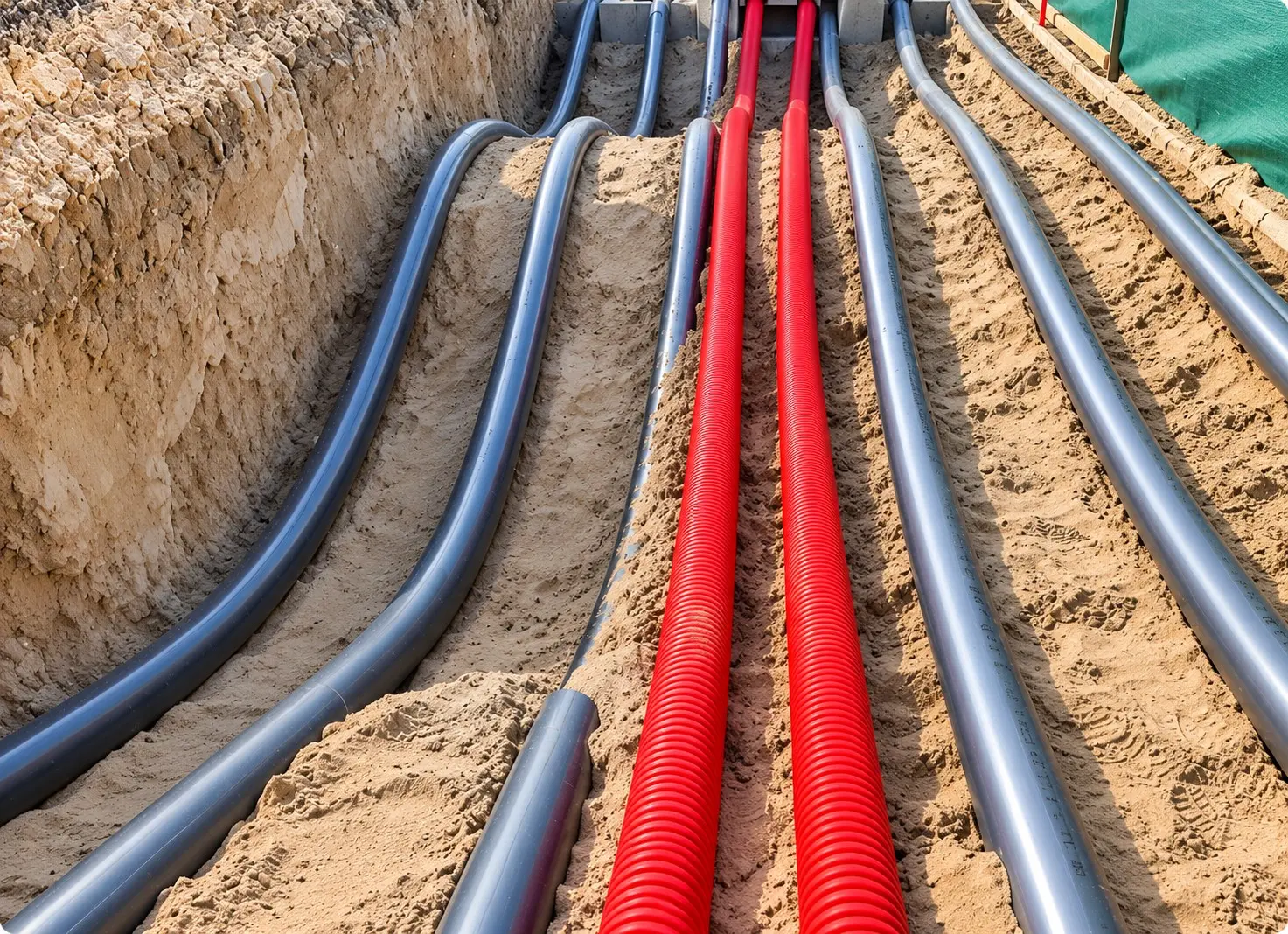
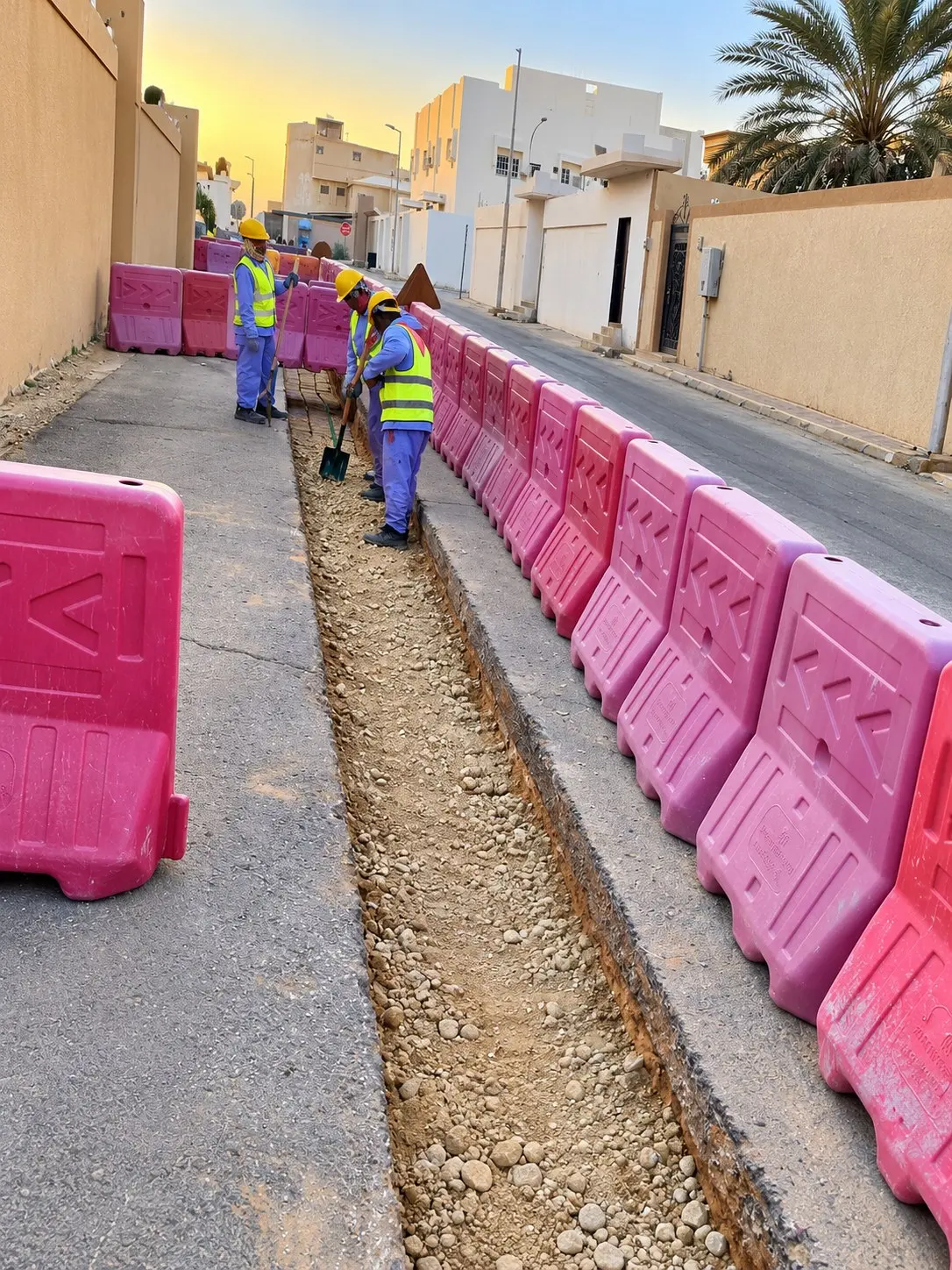
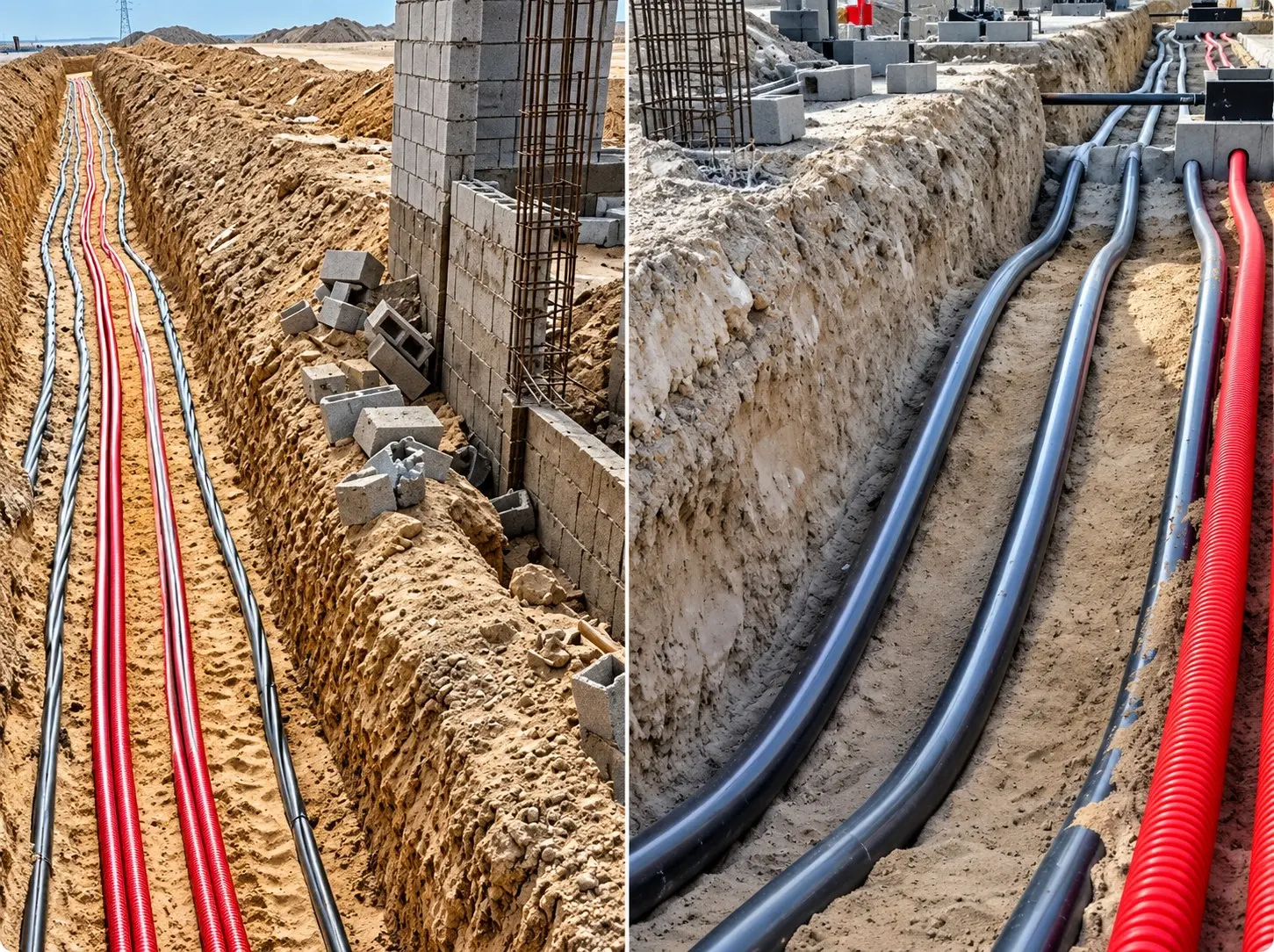
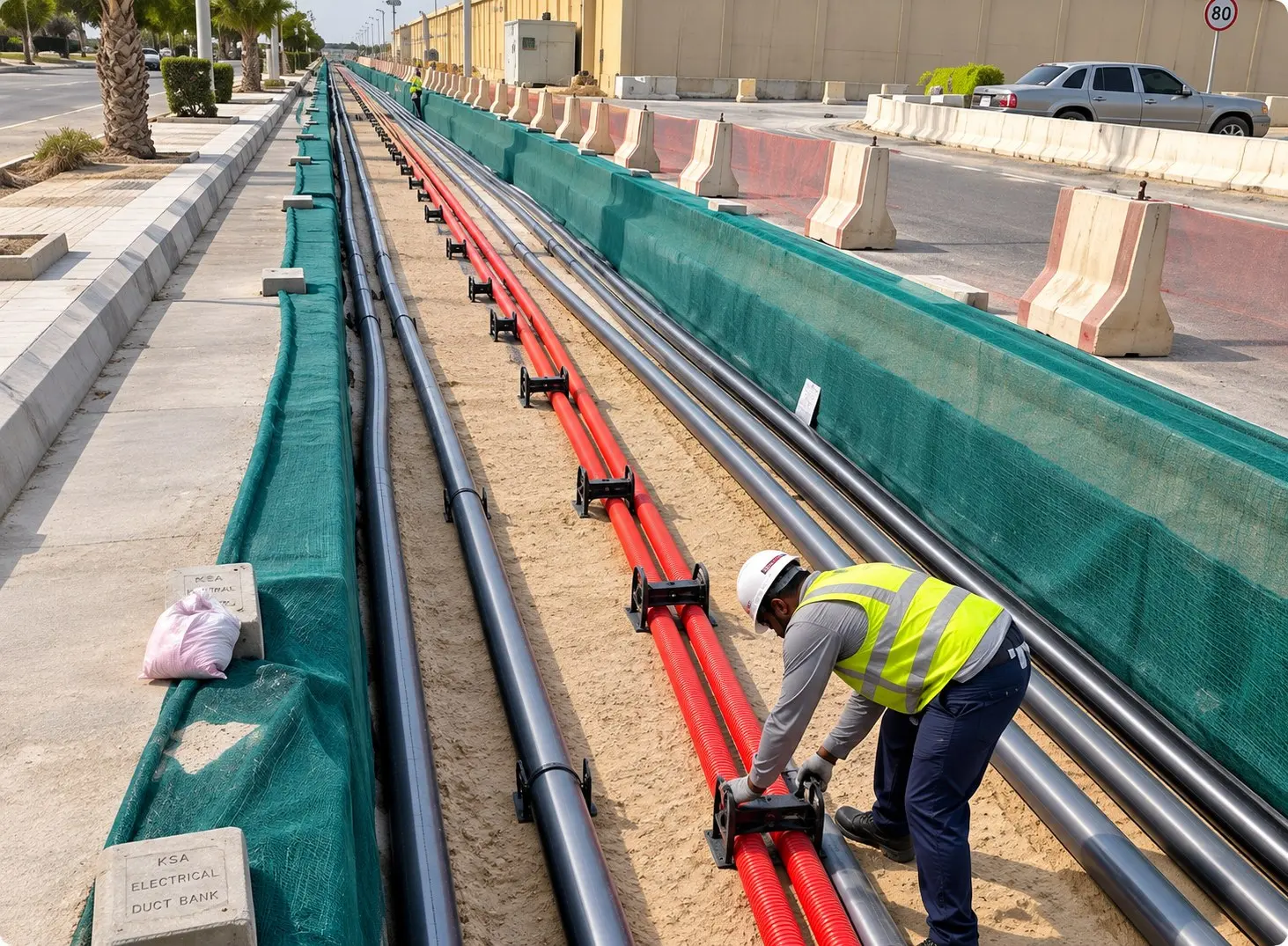
Where the line meets town it goes underground. The trench is opened in sections and bedded with sand, and the cable is pulled in over rollers from the drums.
Sections are joined in the joint bay and terminated at both ends. Sand, protection tiles and warning tape cover the cable before the trench is backfilled and the circuit is tested.
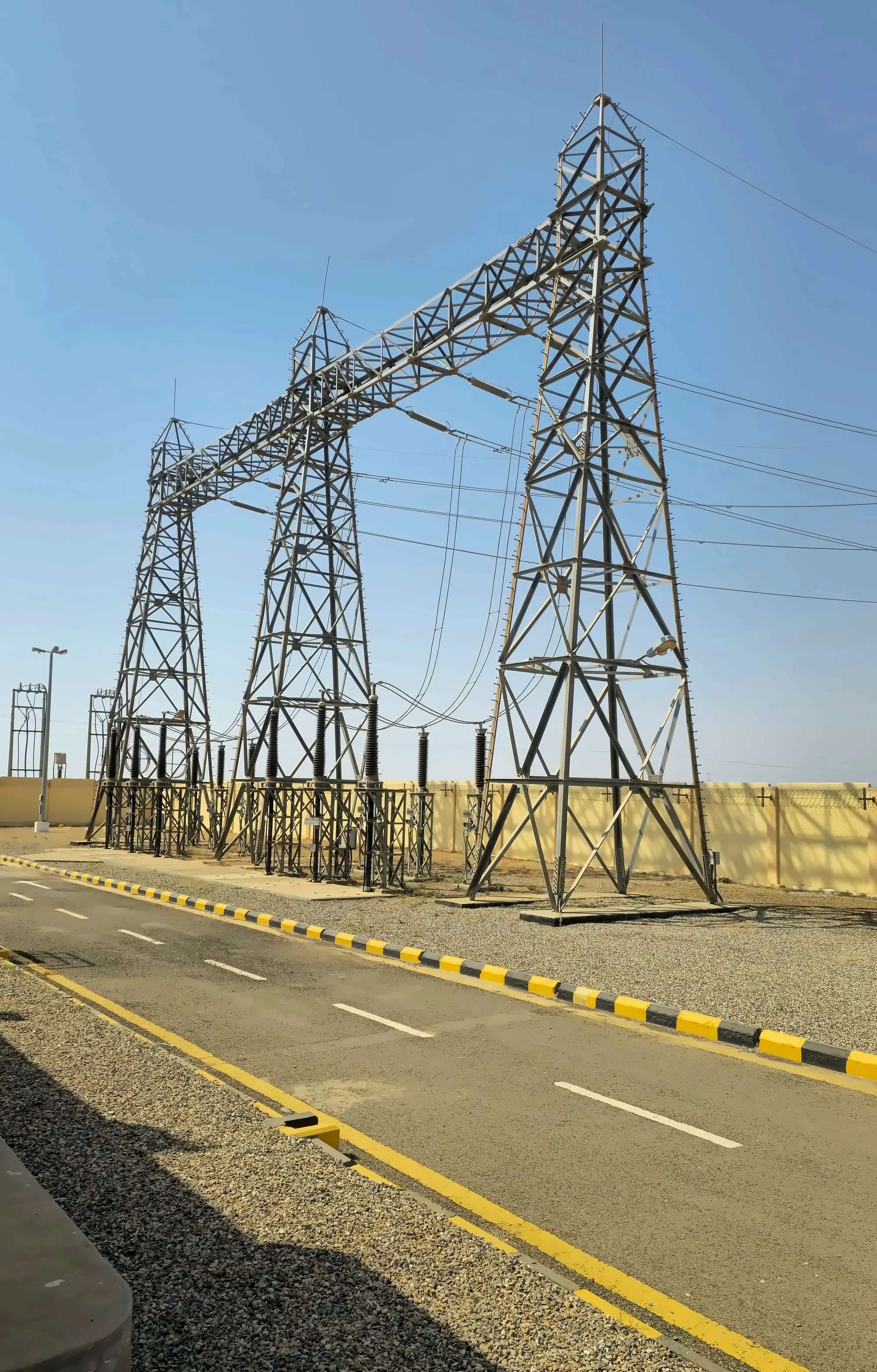
The line is energized, the cable picks up through the sealing ends, and power reaches the receiving substation and the town beyond it.
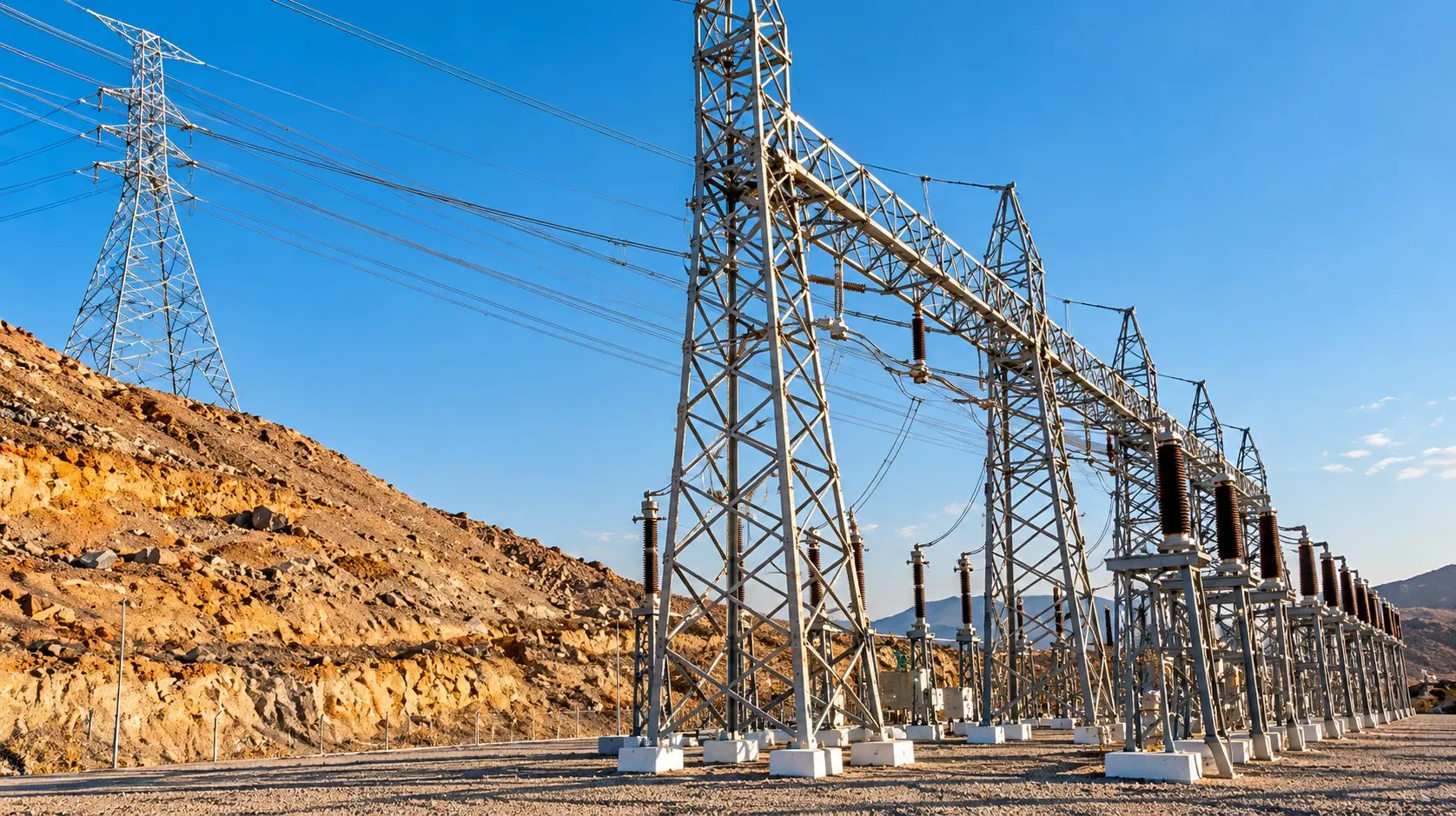
Lower cost per route kilometre and fully visible for inspection and fault-finding while energized. The standard choice for long, open-terrain corridors.
Higher upfront cost, but shielded from wind, lightning, and desert sandstorms, and doesn't compete for surface right of way. The standard choice through urban and site-constrained corridors.